![Which AI Model Should You Actually Use? The Task-by-Task Guide With Real Numbers [2026]](/_next/image?url=%2Fimages%2Fwhich-ai-model-to-use-guide-2026.jpg&w=3840&q=75)
October 1, 2026: model and pricing update
GPT-6.1 Sol is now the OpenAI model to evaluate for daily complex work in API, ChatGPT Work, and Codex; it is not yet available in ordinary Chat. DeepSeek V4.1 Flash replaces the old Flash API model. This update rechecks those changes against official docs; other provider rows retain their stated September source dates. Recommendations are starting points for your own evaluations, not a new cross-provider benchmark.
Claude Sonnet 5.5 is now in Anthropic’s current lineup: claude-sonnet-5-5, 1M context, 128K maximum output, $2 input / $10 output per million tokens. Verified October 1 from the official models overview. Anthropic: models overview.
The September 2026 answer: for serious coding, start with Claude Opus 5.5 and move up to Claude Fable 5.1 only for the hardest code and the longest agent runs. GPT-6 Astra is worth it for OpenAI's hardest, highest-stakes work, if your organization has enabled it. For everyday work, GPT-6.1 Sol is the OpenAI default, and Claude Sonnet 5.5 or Gemini 3.8 Flash cover the rest. Grok 4.7 is the pick for live web and X context, and Qwen3.8 fits if you already build on Alibaba's API and open models. When volume is the problem, send it to GPT-6 Luna, DeepSeek V4, or GLM-5.3-Flash. Do not try to make one model do all of it.
- GPT-6.1 Sol launched September 29: $2 input / $10 output, $0.10 cached input and $2.50 cache writes per 1M tokens up to 272K input. It has 1.05M context and 128K output; reasoning starts at low, not none or minimal. Earlier GPT-6 Sol launch claims below remain historical.
- GPT-6 Sol launched on September 22, 2026. OpenAI built it for complex coding and agentic work and lists $2 input / $10 output per million tokens for prompts up to 272K tokens ($4 / $15 above that), a 1.05M-token context window, and 128K max output.
- GPT-6 Luna launched the same day as OpenAI's most efficient model for focused, high-volume tasks such as summarization, extraction, and simple Q&A: $0.10 input / $0.50 output per million tokens for prompts up to 272K tokens ($0.20 / $0.75 above that).
- OpenAI says GPT-6 Sol makes about half as many mistakes as its predecessor on its internal factuality eval, and frames the new prices as 50% lower than GPT-5.6 pricing. Reasoning effort runs from none to max, with medium as the default.
- Sol and Luna are rolling out gradually in ChatGPT Work and Codex for Plus, Pro, Business, Enterprise, and Edu users, where enterprise admins enable new models. Free and Go users get Luna in the desktop app.
- GPT-5.6 remains available with no deprecation date announced: Sol at $4 / $20 (promotional through at least November 21, 2026; list $5 / $30), Terra at $2 / $12, and Luna at $0.20 / $1.20. There is no GPT-6 Terra.
- GPT-6 Astra ($10 input / $50 output, 1.05M context) is now in the API and on paid plans, but organization admins may need to enable it.
- Claude Fable 5.1 is generally available at $10 input / $50 output per million tokens. Anthropic lists cache reads at $0.25 per million tokens and makes Mythos 5.1 available only through trusted access programs.
- Claude Opus 5.5 was released on September 22, 2026 at $4 input / $20 output per million tokens, with cached input at $0.20 and cache writes at $5. That is cheaper than Claude Opus 5 at $5 / $25.
- Claude Sonnet 5.5 is now in Anthropic’s current lineup: claude-sonnet-5-5, 1M context, 128K maximum output, $2 input / $10 output per million tokens. Verified October 1 from the official models overview.
- Gemini 3.8 Flash is Google's current general-purpose workhorse. Google lists an introductory $0.75 input / $3.75 output rate through December 31, 2026 and a 1M-token input limit.
- Gemini 4 Argon was announced on September 30, 2026 with an output limit of up to 1M tokens (up from 64K) and an introductory $2 input / $10 output rate, rising to $4 / $20, with cached input 95% off. Google is rolling it out first to trusted cyber defenders through the Fairwind program, with wider access starting with paid API customers and Google AI Ultra subscribers (no date given), so it is not yet a general API option.
- DeepSeek V4.1 Flash is served as deepseek-flash; the retired V4 Flash and Vision Exp aliases now route to it. V4 Pro remains available as DeepSeek-V4-Pro-0813. Pricing separates peak/off-peak and cached/uncached tokens.
- Grok 4.7 is xAI's latest API model with a 500K context window: $2 / $6 for prompts under 200K tokens, and $4 / $12 for every token in a request whose prompt reaches 200K tokens.
- Qwen3.8-Max, Qwen3.8-Flash, and Qwen3.8-27B are listed in Alibaba Cloud Model Studio with 1M-token limits and region-specific prices.
- Kimi K3 is Moonshot's current flagship, while Kimi's Agent Swarm workflow remains a separate product mode. Check the current CNY API rate card before budgeting it.
- Google Gemini Omni Flash is now Google's default video-generation model, with Veo 3.1 kept for scene extension and last-frame control.
- Nano Banana Pro is Google's premium image model; Nano Banana 2 Lite is the newer fast, low-cost option.
You will not find private benchmark results here. This is a routing guide built from official product docs, pricing pages, and public launch notes, checked on September 4, 2026. We added OpenAI's GPT-6 Sol and Luna launch and Claude Opus 5.5 on September 25, 2026.
This update adds GPT-6 Sol and GPT-6 Luna (released September 22) and Claude Opus 5.5, alongside GPT-6 Astra, Claude Fable 5.1, Gemini 3.8 Flash, Grok 4.7, Qwen3.8, and the latest DeepSeek and Z.ai rates. Several of these are phased rollouts or promotional prices, which is why access and price show up in almost every recommendation below. The method is the same as before. Match the model to the task, then check the rate card before you commit a workload to it.
Fast-moving pricing caveat
Model names, tiers, and prices in this space change monthly. A few catches right now: GPT-6 Astra may need an organization admin to enable it, and GPT-6.1 Sol and GPT-6 Luna charge more for prompts over 272K tokens. GPT-5.6 Sol and Gemini 3.8 Flash are on time-limited pricing, and DeepSeek uses peak/off-peak and cache-based rates. Before you budget a workload, confirm the current number and your access on the provider's own pricing page.
Quick picks
Start with the task, then check price and access
| Task | Default pick | Budget or alternate pick | Why |
|---|---|---|---|
| Hard coding / refactors | Claude Fable 5.1 or Opus 5.5 | GPT-6 Astra (if enabled) | Fable 5.1 is generally available and Opus 5.5 costs less; Astra is priced for the hardest work and may need an admin to enable it. |
| Daily coding assistant | Claude Sonnet 5.5 or GPT-6.1 Sol | Grok 4.7 | Sonnet and Sol cover everyday work, and OpenAI built Sol for coding and agentic work; Grok is useful when current web or X context matters. |
| Writing and editing | GPT-6.1 Sol in ChatGPT Work or the API | Claude Sonnet 5.5 | Use ChatGPT for a broad tool surface; use Claude when tight constraints matter. |
| Research over long documents | Gemini 3.8 Flash | Qwen3.8-Max | Both list 1M-token input limits; choose based on where your data and deployment already live. |
| Data analysis | ChatGPT Work with GPT-6.1 Sol | Gemini 3.8 Flash | ChatGPT has mature data tools; Gemini fits Google-connected work and multimodal inputs. |
| High-volume summaries and extraction | GPT-6 Luna | DeepSeek V4.1 Flash or GLM-5.3-Flash | OpenAI built Luna for focused, high-volume tasks at $0.10 / $0.50 per 1M tokens; compare cache and peak-hour rules before you switch. |
| Image generation | GPT Image / ChatGPT or Midjourney | Nano Banana Pro or Nano Banana 2 Lite | Use ChatGPT for convenience, Midjourney for style, and Google's Nano Banana models for Google workflows and text-heavy visuals. |
| Video generation | Gemini Omni Flash | Veo 3.1 or Runway | Omni Flash is now Google's default with conversational editing; Veo 3.1 handles scene extension and last-frame control. |
| Automation / agent swarms | Kimi K3 | n8n + GLM-5.3-Flash | Kimi offers a Swarm mode; GLM-5.3-Flash is a low-cost option for DIY pipelines at its standard rate. |
The one rule behind this table: pay for a strong model when a mistake is expensive, and use a cheap one when volume is the bottleneck. Most teams need both, which is why routing beats forcing one model to do everything.
Prefer an interactive answer? Our AI model picker asks six quick questions about your tasks and budget and recommends a model in about a minute.
Current flagships head-to-head
Fable 5.1 and Astra cost five times what Sol and Sonnet 5.5 do per token. Most work does not need them.
| Model | Provider | Best for | Price in / out per 1M | Status |
|---|---|---|---|---|
| Claude Fable 5.1 | Anthropic | Highest-capability, long-running agent work | $10 / $50 | GA |
| Claude Opus 5.5 | Anthropic | Premium coding and agents | $4 / $20 | GA; released Sep 22 |
| Claude Sonnet 5.5 | Anthropic | Everyday agentic coding | $2 / $10 | 1M context; 128K output; claude-sonnet-5-5; 2026-10-01 |
| GPT-6 Astra | OpenAI | Hardest, highest-stakes work | $10 / $50 | API and paid plans; admins may need to enable it |
| GPT-6.1 Sol | OpenAI | Complex coding, agents, and general work | $2 / $10 | Released Sep 29; API; tool calling via Responses |
| GPT-6 Luna | OpenAI | Focused high-volume tasks | $0.10 / $0.50 | Released Sep 22; API, ChatGPT Work, Codex |
| GPT-5.6 Sol | OpenAI | Previous-generation general work | $4 / $20 promo | Still available; promo through at least Nov 21; list $5 / $30 |
| Gemini 3.8 Flash | Fast multimodal and long-context work | $0.75 / $3.75 intro | GA; promo through Dec 31 | |
| DeepSeek V4 Pro | DeepSeek | Cost-sensitive coding and agents | $1.32 / $3.96 peak | GA |
| DeepSeek V4.1 Flash | DeepSeek | Low-cost high-volume API work | $0.30 / $1.20 peak | GA |
| Grok 4.7 | xAI | Live web/X context | $2 / $6 short | GA |
| Qwen3.8-Max | Alibaba Cloud | Long-context API work | $2 / $6 | GA |
| GLM-5.3-Flash | Z.ai | Low-cost tool use | $0.15 / $0.50 | GA; promo ended Sep 9 |
| Kimi K3 | Moonshot | Agentic work | ¥20 / ¥100 | GA; CNY rate |
Source: Official provider pricing pages, checked September 4, 2026; OpenAI GPT-6 Sol/Luna and Claude Opus 5.5 rows added September 25, 2026. Prices exclude cache, batch, regional, and long-context adjustments.
If you came here to settle an "X versus Y" argument, the answer usually turns on the task, the price, and where your workflow already lives, not on one leaderboard. My short version of the table: reach for Fable 5.1 when capability is all that matters, and Opus 5.5 for most serious coding. GPT-6.1 Sol is the broad OpenAI default. Gemini 3.8 Flash is the fast choice for long context. For cost, GPT-6 Luna, DeepSeek, and GLM-5.3-Flash are the ones to compare. None of that depends on which brand you like.
For a closer look at OpenAI's new pair, including reasoning effort settings and long-prompt pricing, read our GPT-6 Sol and Luna guide.
Best AI for coding
Claude Opus 5.5 by default, Fable 5.1 when failure is expensive, Sonnet 5.5 or GPT-6.1 Sol day to day, and GLM-5.3-Flash or DeepSeek V4 on a budget.
| Model | Use it for | Published cost reference | Caveat |
|---|---|---|---|
| Claude Fable 5.1 | The very hardest, longest-horizon coding and agent runs | $10 input / $50 output per 1M tokens | Anthropic's high-capability generally available model; reserve it for work where failure is expensive. |
| Claude Opus 5.5 | Difficult repo work, agents, code review, long multi-step tasks | $4 input / $20 output per 1M tokens | Released September 22 and cheaper than Opus 5; test it against your own repository. |
| Claude Sonnet 5.5 | Everyday agentic coding where Opus is overkill | $2 input / $10 output per 1M tokens | 1M context; 128K output; claude-sonnet-5-5; 2026-10-01 |
| GPT-6.1 Sol in Codex | OpenAI coding agent workflows | GPT-6.1 Sol API pricing is $2 input / $10 output per 1M tokens for prompts up to 272K tokens | Rolling out gradually on paid plans; Codex bills in token credits, so check the current Codex rate card. |
| DeepSeek V4 Pro | Cost-sensitive coding and agent experiments | $1.32 peak cache-miss input / $3.96 output per 1M tokens | Off-peak and cache-hit prices are lower; run your own evals before production. |
| GLM-5.3-Flash | Cheap coding and tool-use experiments | $0.15 input / $0.50 output per 1M tokens | Standard rate; the introductory promotion ended September 9, 2026. |
For serious coding I would start with Claude Opus 5.5. It costs less than Opus 5 did, and Fable 5.1 at $10 / $50 only earns its price on the tasks where Opus falls short. For everyday agentic coding, Claude Sonnet 5.5 and GPT-6.1 Sol are the practical defaults, and the choice between them mostly comes down to whether you live in Claude Code or Codex. Sol lets you set reasoning effort from low to max. Leave it at the default (medium) and raise it only for hard tasks. Whichever you pick, test it on your own repository before you trust it.
If API cost is the constraint, compare DeepSeek V4, GLM-5.3-Flash, and Qwen3.8-27B. Their official rate cards differ on regions, cache rules, and peak-hour pricing, so price the exact mode your workload will use.
Our Grok 4.7 guide covers API pricing, Fast availability, coding benchmarks and public builds, with a closer look at the cost of a completed task.
For Meta's current coding model, the Muse Spark 1.3 guide covers Standard and Contributor pricing, privacy restrictions, coding benchmarks and public builds.
For Xiaomi's newer options, the MiMo V2.6 guide covers Pro and Flash pricing, public build examples, the September tool-call update, and the integration checks to run before adopting them.
Kimi K3 is a different bet. Moonshot lists it in CNY, with a 1M-token context window and separate cache-hit and cache-miss rates. If you need its agent workflow, confirm the current product mode and currency before comparing it with USD API prices.
Best AI for writing
GPT-6.1 Sol for broad writing. Claude Sonnet 5.5 for precise editing.
| Model | Best fit | Cost or access | What to watch |
|---|---|---|---|
| GPT-6.1 Sol in ChatGPT Work | Drafting, rewriting, docs, mixed tool work | ChatGPT paid plans (gradual rollout); API $2 / $10 per 1M tokens | New model; test it on your own documents and review long structured docs. |
| Claude Sonnet 5.5 | Editing, technical writing, policy, structured docs | $2 / $10 per 1M tokens | 1M context; 128K output; claude-sonnet-5-5; 2026-10-01 |
| Gemini 3.8 Flash | Research-backed writing and long source material | $0.75 / $3.75 intro per 1M tokens | Intro price runs through December 31, 2026; check citations manually. |
| GPT-6 Luna | Summaries, short rewrites, and extraction at volume | $0.10 / $0.50 per 1M tokens | Built for focused, high-volume tasks; review before anything is published. |
| DeepSeek V4.1 Flash | High-volume drafts, summaries, rewrites | $0.30 peak cache-miss input / $1.20 output per 1M tokens | Use for volume, not for final brand voice without review. |
If you write in a browser, ChatGPT is still the easy answer. Browsing, data analysis, files, image generation, and canvas all sit in one product, which helps when you are turning messy notes into a finished doc. GPT-6 Sol has been rolling out gradually in ChatGPT Work and Codex since September 22 for Plus, Pro, Business, Enterprise, and Edu plans.
For a writing system built on the API, the shortlist is GPT-6.1 Sol, Claude Sonnet 5.5, Gemini 3.8 Flash, Qwen3.8, GPT-6 Luna, and DeepSeek V4. Where you land depends on your quality bar, your cost target, and how much review each output gets before it ships.
I would not publish raw output from the cheap models for anything that speaks for a company. They are fine for drafts and variants, but the final pass needs a stronger model or a human editor.
Best AI for research
Long documents and live web search need different tools, so decide which kind of research you are doing first.
| Research job | Best pick | Why |
|---|---|---|
| A long report, legal packet, transcript set, or codebase | Gemini 3.8 Flash or Qwen3.8-Max | Both list 1M-token input limits; pick by region, tools, and data location. |
| Live web research in a chat product | ChatGPT, Grok 4.7, or Perplexity Pro | These products are built for interactive source-finding workflows; check the sources. |
| Cheap document triage at scale | GPT-6 Luna, DeepSeek V4.1 Flash, or GLM-5.3-Flash | All three are low-cost options, but each has different cache, long-prompt, or peak-hour rules. |
| Research that becomes a deliverable | Kimi K3 or GPT-6.1 Sol | Choose the product whose document and tool workflow you can review. |
| Research with Google ecosystem data | Gemini 3.8 Flash | It is the natural pick when your sources and workflow live in Google products. |
Get a task-based AI model recommendation in 60 seconds.
Of the Google models, Gemini 3.8 Flash is the easiest one to recommend right now. Google lists a 1M-token input limit and an introductory API rate of $0.75 input / $3.75 output per million tokens through December 31, 2026. If your project runs past that date, budget at the standard rate instead, and confirm the current region and plan before you commit.
When the job is less about raw context and more about working across tools and live sources, use GPT-6.1 Sol or Grok 4.7. Web access does not stop a model from citing weak pages, so check the sources behind any claim that matters.
Best AI for data analysis
ChatGPT for the product experience. Gemini or Claude when your workflow is already there.
| Scenario | Pick | Reason |
|---|---|---|
| Upload a CSV and ask questions | ChatGPT Work with GPT-6.1 Sol | OpenAI lists data analysis and file analysis among supported ChatGPT tools. |
| Analyze data in Google workflows | Gemini 3.8 Flash | Best fit when your data is already in Google's stack. |
| Enterprise document/data reasoning | Claude Opus 5.5 or Fable 5.1 | Strong premium options when accuracy matters more than token cost. |
| Cheap batch extraction | GPT-6 Luna, DeepSeek V4.1 Flash, or GLM-5.3-Flash | Low token cost makes them useful for first-pass extraction and classification; OpenAI names extraction as a Luna use case. |
| Generate reports, slides, or sheets from research | Kimi K3 or GPT-6.1 Sol | Use the tool path that produces a reviewable deliverable. |
If you just have a spreadsheet and a question, use ChatGPT. You upload the file, ask for the chart, and then check that the chart says what you think it says. Developers building a data pipeline have more to decide. I would send cheap extraction to GPT-6 Luna, DeepSeek V4.1 Flash, or GLM-5.3-Flash, give the large-context steps to Gemini 3.8 Flash or Qwen3.8, and save a premium model for the final reasoning.
Best AI for images and video
ChatGPT if the image is part of a bigger job, Midjourney if the look matters most, Google for text in images and for video.
| Task | Pick | Why |
|---|---|---|
| Quick images inside a writing workflow | ChatGPT image generation | Convenient when the image is part of a broader document or campaign. |
| Designed marketing visuals | Midjourney | Still a strong choice when visual taste matters more than API integration. |
| Text-heavy images, diagrams, Google workflows | Nano Banana Pro | Google says it improves text rendering, world knowledge, and creative controls. |
| Fast, low-cost Google image generation | Nano Banana 2 Lite | Google's newer cost-efficient image model, launched alongside Omni Flash. |
| Short AI video | Gemini Omni Flash | Google's default video model, with conversational editing and $0.10 per second output. |
If you are comparing against OpenAI, skip DALL-E 3. OpenAI's current docs point to the GPT Image model family. DALL-E 3 still has historical interest and may live on inside older workflows, but it is the wrong baseline for a 2026 comparison.
On the Google side, Nano Banana Pro is the premium image model. Nano Banana 2 Lite is the newer fast, low-cost option that launched with Omni Flash. For video, Google now points to Gemini Omni Flash as the default (with conversational editing at $0.10 per second of output) and keeps Veo 3.1 for scene extension and last-frame control. See our Gemini Omni Flash guide for the specs and limits.
Best AI for automation
Kimi for swarms, Claude for code-heavy agents, DeepSeek or GPT-6 Luna for cheap volume.
| Automation style | Best pick | Why |
|---|---|---|
| Large parallel research or content tasks | Kimi K3 workflows | Use only after checking the current product mode, limits, and CNY rate card. |
| Code-heavy autonomous work | Claude Fable 5.1 or Claude Sonnet 5.5 | Claude Code and Anthropic's agent positioning make this a strong path; still review diffs. |
| OpenAI/Codex teams | GPT-6.1 Sol in Codex | Use when your workflow is already inside Codex; OpenAI built Sol for agentic work. |
| Cheap API automation | GPT-6 Luna, DeepSeek V4.1 Flash, or GLM-5.3-Flash | All have low listed rates, with different cache, long-prompt, and peak-hour rules. |
| No-code app workflow automation | Zapier, n8n, Make, Lindy, or Manus | Use a workflow tool when orchestration matters more than the base model. |
Kimi's agent workflow is worth testing when parallel work is the point. A generous product limit says nothing about whether the output is good, though. Start with a small research or batch-processing run and read every output before you scale it up.
My rule of thumb is to pick by what the automation touches. If it writes or edits production code, start with Claude. If it touches thousands of low-risk records, start with DeepSeek V4.1 Flash or GPT-6 Luna and put quality gates in front of anything that ships.
Pricing comparison
API rates and chat subscriptions are priced differently, so do not compare them line for line.
| Model or product | Input / 1M tokens | Output / 1M tokens | Notes |
|---|---|---|---|
| GPT-6 Astra | $10 | $50 | Now in the API and on paid plans; organization admins may need to enable it. |
| GPT-6.1 Sol | $2 | $10 | Prompts up to 272K tokens; $4 / $15 above that. Cached input $0.10; cache writes $2.50. 1.05M context, 128K max output. |
| GPT-6 Luna | $0.10 | $0.50 | Prompts up to 272K tokens; $0.20 / $0.75 above that. Cached input $0.01. 1.05M context, 128K max output. |
| GPT-5.6 Sol (previous generation) | $4 promo | $20 promo | Still available; promotional rate through at least November 21, 2026 (list $5 / $30); cached input $0.40. |
| GPT-5.5 Pro | $30 | $180 | Higher-capability GPT-5.5 tier for the hardest work. |
| Claude Fable 5.1 | $10 | $50 | Generally available; cache reads are $0.25/M. |
| Claude Opus 5.5 | $4 | $20 | Released September 22, 2026; cached input $0.20, cache writes $5. |
| Claude Opus 5 (previous generation) | $5 | $25 | Previous Opus model; this guide now recommends the cheaper Opus 5.5. |
| Claude Sonnet 5.5 | $2 | $10 | 1M context; 128K output; claude-sonnet-5-5; 2026-10-01 |
| Claude Haiku 4.5 | $1 | $5 | Fast cheaper Claude model. |
| Gemini 3.8 Flash | $0.75 intro | $3.75 intro | Intro rate through December 31, 2026; standard rate is $1.50 / $7.50. |
| Gemini 3.5 Flash | $1.50 | $9 | Older Gemini option; compare with current Gemini 3.8 Flash before choosing. |
| DeepSeek V4.1 Flash | $0.30 peak cache miss | $1.20 peak | Off-peak and cache-hit rates are lower; check the live rate card. |
| DeepSeek V4 Pro | $1.32 peak cache miss | $3.96 peak | Off-peak and cache-hit rates are lower; check the live rate card. |
| Grok 4.7 | $2 short / $4 long | $6 short / $12 long | xAI bills the whole request at the higher rate once the prompt reaches 200K tokens. |
| Qwen3.8-27B | $0.50 | $3 | International Model Studio rate; region and deployment can differ. |
| GLM-5.3-Flash | $0.15 | $0.50 | Standard rate; the introductory promotion ended September 9, 2026. |
| Kimi K3 | ¥20 | ¥100 | Moonshot lists this rate in CNY; cache hit is ¥2/M. |
| Perplexity Pro | Subscription | Subscription | $20/month consumer research product. |
Source: Official provider pricing pages checked September 4, 2026; OpenAI and Claude Opus 5.5 rows updated September 25, 2026. Some models have separate long-context, cache, batch, subscription, regional, or workspace pricing.
One detail on the OpenAI rows is easy to miss: GPT-6.1 Sol and GPT-6 Luna are priced by prompt length. Prompts over 272K tokens use higher rates, $4 / $15 per million tokens for Sol and $0.20 / $0.75 for Luna, so budget with those numbers if your workload sends very long prompts. OpenAI frames the new prices as 50% lower than GPT-5.6 pricing. For a wider cost view across providers, see our AI API price index.
Cheap does not mean equivalent
Low-cost models make volume work far cheaper, but a lower price per token tells you nothing about whether the output is right. Test GPT-6 Luna, GLM-5.3-Flash, DeepSeek V4, or Qwen3.8 on your own low-risk examples before you move production traffic.
For GPT-6.1 Sol, prompts above 272K input tokens double input and cache rates and multiply output rates by 1.5 for the whole request. Batch and Flex are half Standard; Fast is twice Standard. Use the Responses API for tool calls. Pro is an execution mode, not a separate model slug. See the official model page and GPT-6 guide.
DeepSeek V4.1 Flash peak/off-peak USD rates per million tokens are $0.30/$0.15 uncached input, $0.006/$0.003 cached input, and $1.20/$0.60 output. V4 Pro is $1.32/$0.66, $0.044/$0.022, and $3.96/$1.98 respectively. Peak windows are 01:00–04:00 and 06:00–10:00 UTC on weekdays excluding Chinese public holidays. All other hours are off-peak. Official rate card.
Budget tiers
Where the next dollar should go as your spend grows.
$0/month: free and limited
Free tiers from ChatGPT, Claude, Gemini, Kimi, or Perplexity will cover general work, depending on access limits in your region. ChatGPT Free and Go users get GPT-6 Luna in the desktop app. Free coding tiers are fine for trying things out but will not carry sustained professional use. Free research products are good for exploring a topic, as long as you check the sources yourself before you publish anything, and free image quotas are enough for drafts and ideas.
$20/month: one paid assistant
For most people, this means ChatGPT Plus. It puts writing, data analysis, image generation, files, and research in one product, and Plus includes GPT-6.1 Sol in ChatGPT Work and Codex as the rollout reaches your account. If your work is mostly writing, reasoning, and Claude Code, pay for Claude Pro instead. If you live in source-backed web research, Perplexity Pro is the better $20.
$50-100/month: professional individual stack
Keep ChatGPT Plus or Claude Pro as your main assistant and add Gemini or Perplexity for research, depending on whether you need long context or live web answers. The rest can go to API experiments with GPT-6 Luna, DeepSeek V4.1 Flash, Qwen3.8-27B, or GLM-5.3-Flash for low-cost workflows. For coding, choose between Claude Code, Codex, Cursor, or your editor's built-in assistant based on how you work, not on brand.
$200+/month: routed stack
At this level you should be routing work on purpose. Hard code changes go to Claude Fable 5.1, Claude Opus 5.5, or GPT-6 Astra where enabled. Bulk drafting and extraction go to DeepSeek V4.1 Flash or GPT-6 Luna, and large document work goes to Gemini 3.8 Flash or Qwen3.8-Max. Kimi K3 can take parallel agent runs once you have tested the product mode, its limits, and the quality of what it produces. Anything customer-facing still gets a final review from a premium model plus a human.
The routing strategy
- 1Save Claude Fable 5.1 or GPT-6 Astra for work where mistakes are expensive, and only when your access and budget allow it.
- 2Everyday work goes to GPT-6.1 Sol, Claude Sonnet 5.5, or Gemini 3.8 Flash.
- 3Qwen3.8-Max makes sense when a 1M-token API context and Alibaba deployment fit your stack.
- 4Cheap high-volume extraction, classification, summaries, and first drafts belong on GPT-6 Luna, DeepSeek V4, or GLM-5.3-Flash.
- 5Try Kimi K3 when the task benefits from parallel sub-agents or deliverables like docs, slides, sheets, and websites.
- 6Retest monthly. Access, pricing, and model names are changing faster than in normal software products.
FAQ
Which AI model is best for coding in 2026?
For serious coding, start with Claude Opus 5.5. Claude Fable 5.1 and GPT-6 Astra are the high-capability options above it, though Astra, now in the API and on paid plans, may need an organization admin to enable it. GPT-6.1 Sol, Claude Sonnet 5.5, Gemini 3.8 Flash, Grok 4.7, Qwen3.8, and DeepSeek V4 cover most everyday API and assistant work. Choose by task, access, and current price, not by one leaderboard.
What are GPT-6 Sol and GPT-6 Luna?
They are the two OpenAI models released on September 22, 2026. Sol is built for complex coding and agentic work and costs $2 input / $10 output per million tokens. Luna is OpenAI's most efficient model, meant for focused, high-volume tasks, at $0.10 / $0.50. Both list a 1.05M-token context window and 128K maximum output, and both charge more for prompts over 272K tokens. The GPT-5.6 models remain available.
Is GPT-6 Astra available in the API?
Yes, though organization admins may need to enable it first. GPT-6 Astra is now in the API and on paid ChatGPT plans, and the model page lists a 1.05M-token context window, 128K maximum output, and $10 input / $50 output per million tokens. For everyday work, GPT-6.1 Sol is the cheaper OpenAI default at $2 / $10.
What is the cheapest serious AI model in 2026?
GPT-6 Luna and GLM-5.3-Flash tie for the lowest listed output price in this guide, $0.50 per million tokens. Luna is a little cheaper on input at $0.10 for prompts up to 272K tokens, against $0.15 for GLM-5.3-Flash at Z.ai's standard rate (its introductory promotion ended September 9, 2026). DeepSeek V4.1 Flash is another low-cost option, but what you pay depends on peak/off-peak and cache-hit/cache-miss status.
Which AI model is best for research?
It depends on the kind of research. For document-heavy work, Gemini 3.8 Flash and Qwen3.8-Max are the practical 1M-context picks. For live web research in a consumer product, ChatGPT, Grok 4.7, and Perplexity Pro all work, but check their sources yourself. In an API research pipeline, let GPT-6.1 Sol handle the reasoning and GPT-6 Luna the cheap triage.
Sources checked
Official or primary sources used for the September 2026 refresh
- OpenAI: GPT-6.1 Sol specifications and pricing (checked October 1)
- OpenAI: September 29 release and September 25 visual fix
- OpenAI: GPT-6 Astra announcement
- OpenAI: GPT-6 Astra model and pricing
- OpenAI: Introducing GPT-6 Sol and GPT-6 Luna
- OpenAI: GPT-6 Sol model and pricing
- OpenAI: GPT-6 Luna model and pricing
- OpenAI API pricing
- OpenAI: Codex pricing and models
- Anthropic: Claude Opus 5.5 announcement
- Anthropic: Claude Fable 5.1 and Mythos 5.1
- Claude pricing
- Google: Gemini 3.8 Flash announcement
- Google: Gemini 4 Argon announcement
- Google Gemini model catalog
- Google Cloud Vertex AI pricing
- DeepSeek API changelog
- DeepSeek models and pricing
- Kimi K3 announcement
- xAI: Grok 4.7 model docs
- xAI: Grok 4.7 announcement
- Alibaba Cloud: Qwen model catalog
- Alibaba Cloud: Model Studio pricing
- Z.ai: GLM-5.3-Flash pricing
- Z.ai: GLM-5.3-Flash evaluation
- Kimi K3 pricing
- Google: Gemini Omni Flash docs
- Google: Nano Banana Pro
- OpenAI image generation docs
- OpenAI Help: ChatGPT Plus
- Perplexity Help: Perplexity Pro
- Midjourney plan comparison
Bottom line
Stop asking for one winner
In September 2026 the best model still depends on the job. At the top, Anthropic has Claude Fable 5.1 for maximum capability and Claude Opus 5.5 as the premium coding default, while OpenAI has GPT-6 Astra for its hardest work in organizations that have enabled it. GPT-6.1 Sol is the practical OpenAI default and GPT-6 Luna its low-cost volume model. Gemini 3.8 Flash is the fast multimodal workhorse, Grok 4.7 brings live web and X context, and Qwen3.8 covers Alibaba's API and open-model ecosystem. DeepSeek and GLM-5.3-Flash are there to keep volume costs down.
The two expensive mistakes are paying premium prices for routine volume and using cheap models where failure is costly. Avoiding both is mostly a matter of routing each kind of work to the right tier, testing with your own prompts, and keeping a short list of fallbacks for when a price or model changes.
The practical stack
Claude Fable 5.1 or Opus 5.5 for hard code, GPT-6 Astra where enabled, Claude Sonnet 5.5 or GPT-6.1 Sol for daily work, Gemini 3.8 Flash or Qwen3.8 for long context, GPT-6 Luna, DeepSeek V4, or GLM-5.3-Flash for cheap volume, and Kimi when its swarm workflow fits.
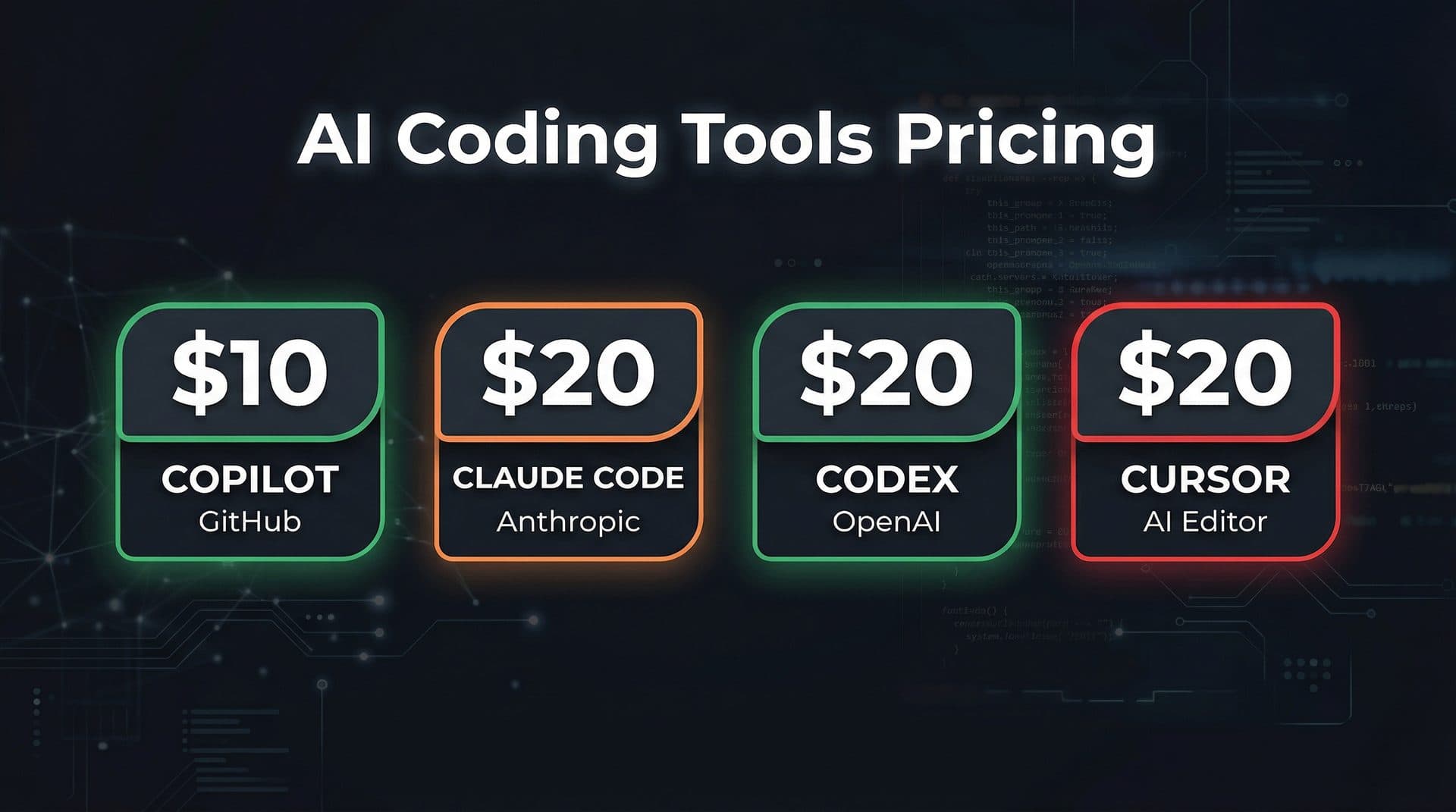
For the frontier models side by side, see the head-to-head table near the top of this guide. For coding tool costs, use the AI coding tools pricing comparison.

Founder of Spectrum AI Labs — testing AI tools and models, and writing up what actually ships.
More about Paras →Not Sure Which AI Stack Fits Your Business?
We help teams pick, integrate, and optimize AI models for their specific workflows. Get a free consultation and we will map your tasks to the right models.