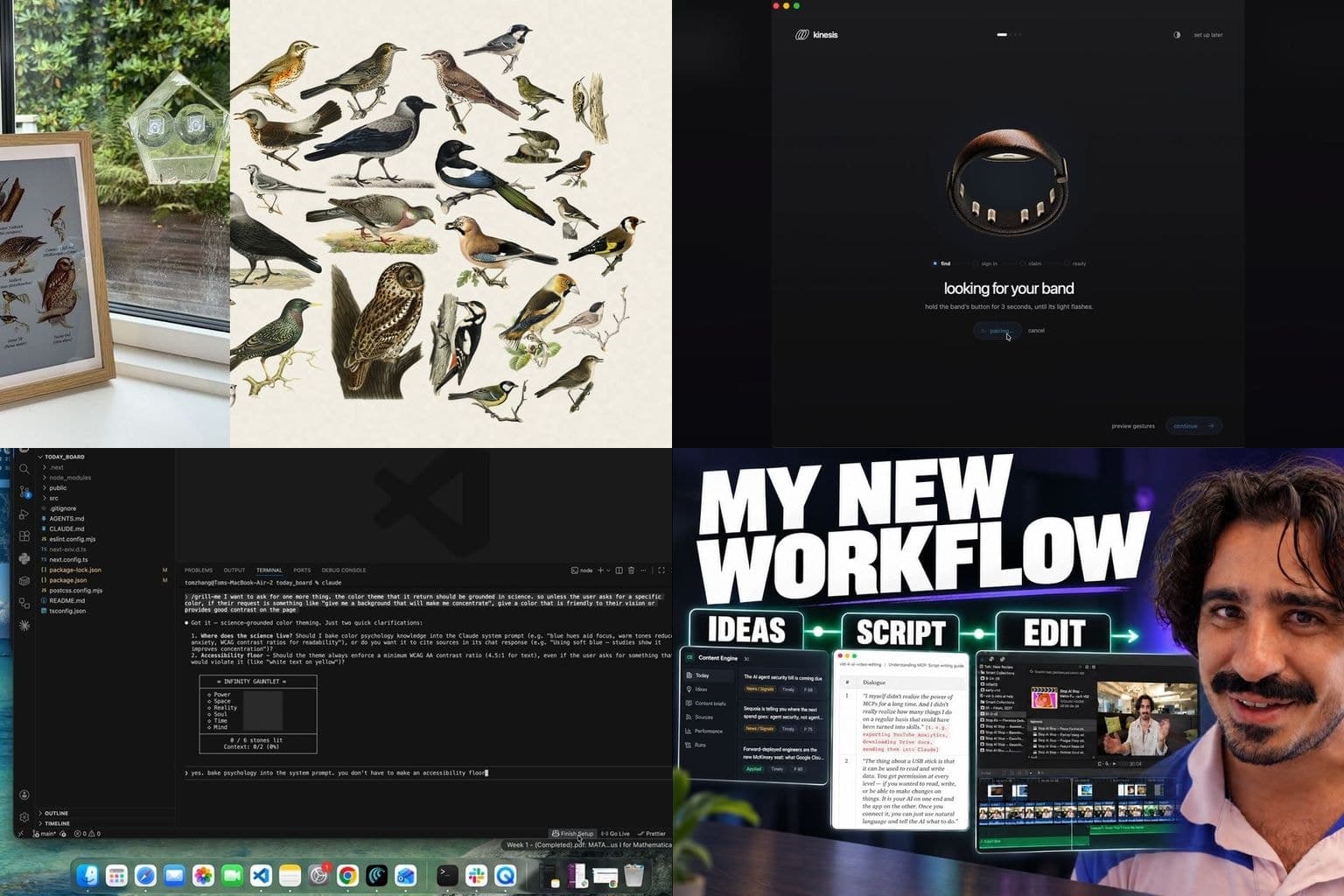
Fugleramme listens for birds outside a window in Norway and redraws an e-ink display with 1800s illustrations. Kinesis turns wrist gestures from Meta's Neural Band into Mac controls. The other four projects are a traffic board for coding agents, a finger-snap Claude skill, a Codex-assisted Final Cut intro and an 8-29 MB local automation model.
I found these through their original launch posts on X and Hacker News, then followed the links to the demos, repositories and release pages. I did not install the apps or test the two hardware projects. When a claim comes only from the builder, I label it that way.
Four projects have public code. The Final Cut entry has a finished video, but no edit timeline, prompts or project file. Needle has a browser demo and a public test in which most requests failed. Each row below says exactly what I could inspect.
| Project | Builder | First seen | Open it | Evidence checked |
|---|---|---|---|---|
| Fugleramme | Arne Giacomo Munthe-Kaas | Sep 15 | Live frame · Code | Live output, repository, release and original launch thread |
| Kinesis | Alex / callbacked | Sep 14 | Code and demo · Launch | Repository, demo video, packaged release and builder's hardware caveat |
| Signal Box | JJ / jjhbk26 | Sep 14 | Post · Code | Original X video, repository documentation and multiplatform release |
| Surfy | Tom Zhang | Sep 17 | Post · Code | Original X demo plus the skill instructions and MediaPipe detector |
| Final Cut intro | Anthony Cinko | Sep 18 | Post · Video | Finished video and the creator's description of his workflow |
| Needle 3 | Cactus Compute | Sep 18 | Demo · Code | Official model files and docs, vendor benchmarks and a public user test |
Not sure which AI model to use?
17 models · Personalized picks · 60 seconds
A bird call changes the picture in this e-ink frame
BirdNET runs locally, and the artwork comes from 1800s natural-history books.
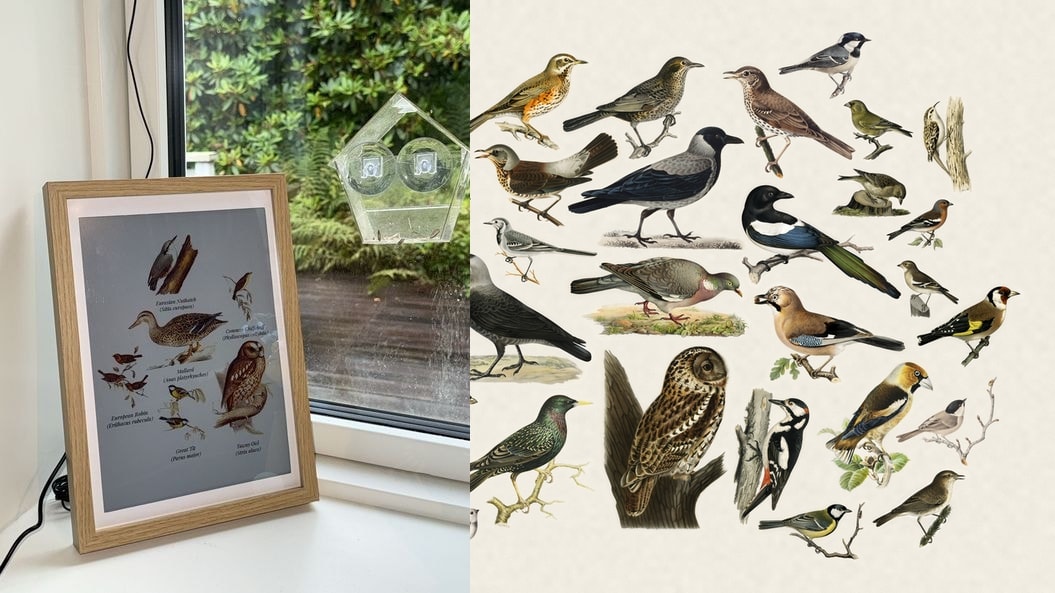
Arne Giacomo Munthe-Kaas put a microphone, Raspberry Pi and e-ink screen beside his kitchen window in Bergen. BirdNET-Go identifies each visitor by sound. Fugleramme finds the matching illustration, scales the bird by its real body mass and redraws the screen when the mix of birds changes.
The repository has more than 800 cut-outs covering over 400 species. They come from public-domain natural-history plates, not an image generator. Arne says he did use AI tools to retouch some of the source art.
Species coverage is uneven. The Nordics, Britain and Germany have the best support; North America has far fewer illustrations. You can run the same display in a browser if you do not have an e-ink panel.
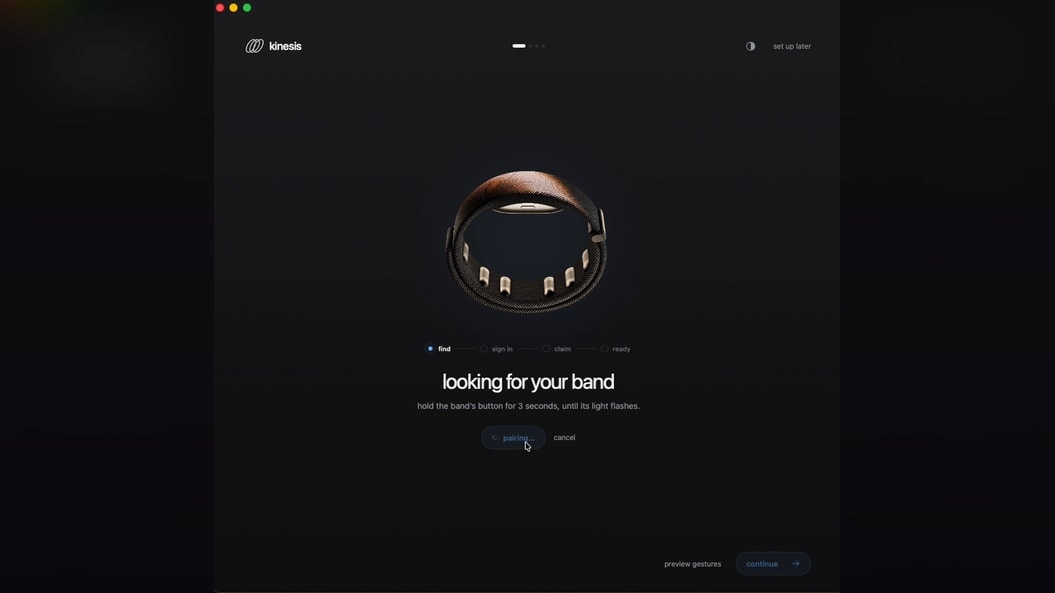
Kinesis turns wrist gestures into Mac controls
Kinesis reads sEMG gestures from Meta's Neural Band.
Alex, who publishes as callbacked, used Astra to return to a ten-month-old experiment for reading the Neural Band without Meta's glasses. Kinesis maps wrist and finger gestures to macOS actions. You can swipe between desktops, open Mission Control, control music, or pinch and turn to change volume and brightness.
The public app is MIT-licensed and requires macOS 14 or newer, Bluetooth, Accessibility permission and a one-time Meta sign-in. Alex describes it as highly experimental. He has tested it with one Neural Band, his own.
I watched the demo and checked the source and setup path. Without the hardware, I could not verify how reliably the gestures work.
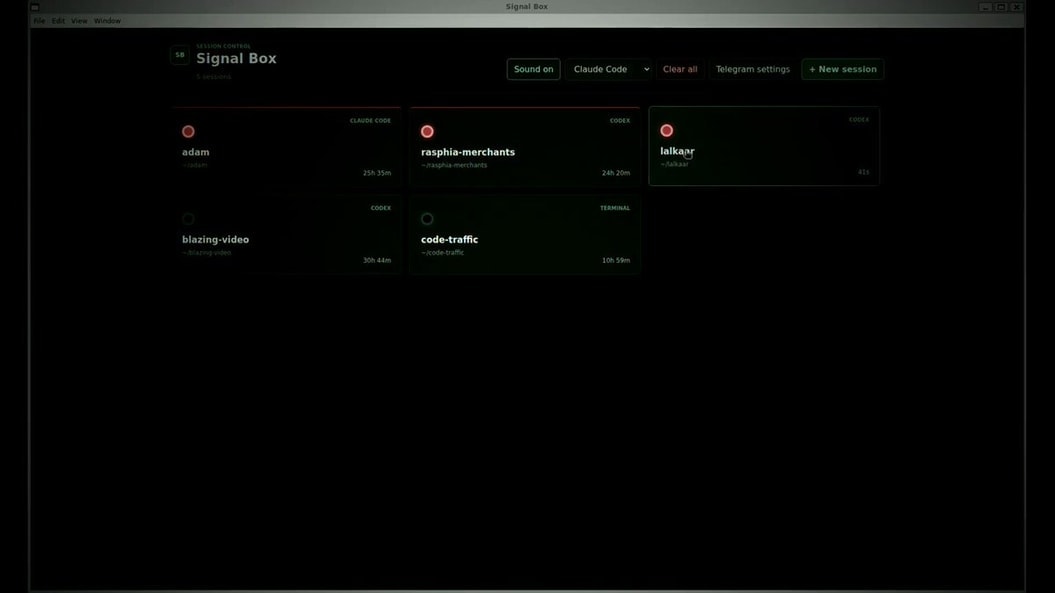
Signal Box gives coding agents traffic lights
Red means done, amber needs approval, green is working, and unlit is idle.
JJ built Signal Box for the point where three or four coding-agent terminals become impossible to track. Its red, amber and green lights come from lifecycle hooks rather than scraped terminal text. The board can start a session, reopen one it owns, play a sound when the state changes and send approval questions to Telegram.
The current release has installers for Windows, macOS and Linux, although Windows has had less testing. Codex support covers the CLI, not the Codex panel in VS Code.
Telegram is the risky part. The bot can send prompts and terminal commands, which effectively gives the configured chat admin access to those sessions. Our Claude Code vs Codex comparison covers the agents Signal Box monitors.
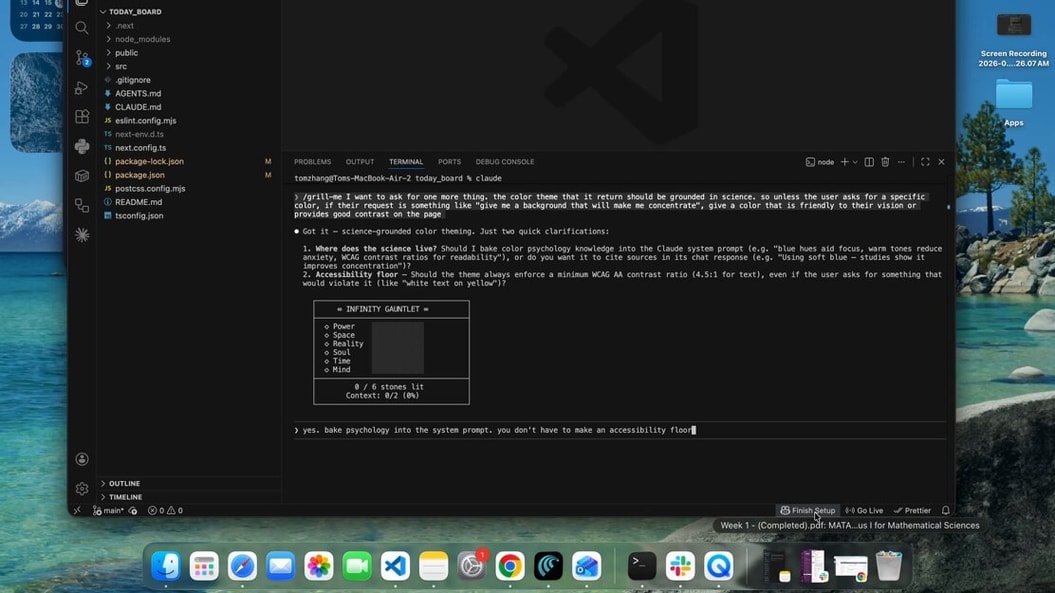
Claude waits for a finger snap before it starts building
A tiny skill turns clarification into an Infinity Gauntlet progress bar.
Tom Zhang turned project setup into an Infinity Gauntlet gag. Surfy makes the coding agent ask questions before touching the task. The six stones fill as it gathers context. Work starts only after the user snaps their fingers or clicks the gauntlet in a browser.
The webcam detector uses OpenCV and MediaPipe to recognise a pinch followed by a flick. Getting it running still takes work. There is no packaged release or declared repository licence, so you have to clone the repo and ask your agent to install the skill and Python package.
The gag works because the agent has to clarify the task before writing code. That is the same habit covered in our expert vibe-coding setup.
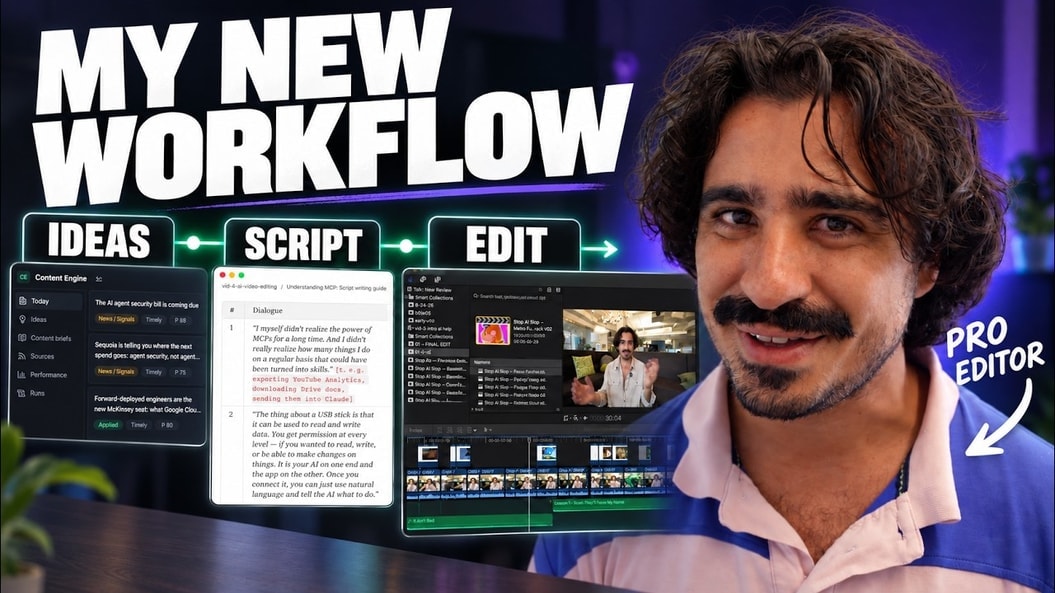
A Final Cut intro made through Codex
Anthony Cinko says he supplied the footage, script and reference screenshots.
Anthony Cinko says he made the intro to his video with GPT-6 Astra. He gave Codex the raw footage, script, Final Cut access and screenshots showing the visual direction. In his account, he chose the ideas and what stayed on screen while the agent handled exports, dragging, dropping and repetitive cleanup.
I could verify the finished video and original post. Anthony did not publish the edit timeline, prompts or project file, so the split of work cannot be checked or reproduced. Our AI content-creation guide covers tools you can compare directly.
Needle 3 puts automation models in 8-29 MB files
It produces tool calls and structured JSON instead of open-ended chat.
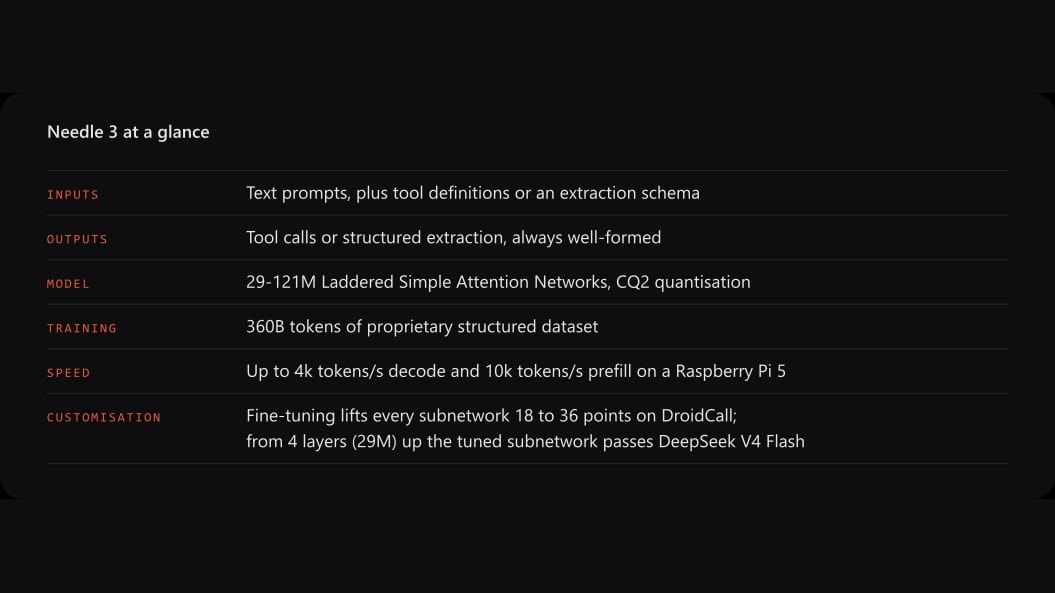
Cactus Compute built Needle 3 for phones, wearables, Raspberry Pis and other small devices. Its subnetworks range from 29 to 121 million parameters and ship as 8-29 MB binaries. They choose tool calls, fill arguments, extract typed data and return a confidence score. The browser demo and Apache-2.0 repository are public.
Cactus reports strong benchmark results. A person in the launch thread got a much rougher result: eight correct answers from 27 single-turn smart-home requests. The model failed on number conversion, action selection and follow-ups.
The builder replied that fewer available tools improve accuracy and that context and follow-ups still need work. I would test Needle against a small action set and real requests before trusting the vendor numbers. If you need broader reasoning, our open-source model guide covers larger models.
Fugleramme identifies birds and arranges a page. Kinesis maps a short list of gestures. Signal Box reduces each agent session to four visible states. Needle emits one constrained call. I would copy that restraint because it makes failures easy to see.
They also leave a way out. Fugleramme works in a browser without the e-ink panel. Surfy offers a button when the camera gesture fails. Needle can hand an uncertain request to a larger model. I would test that fallback before adding another feature.
See the previous AI Builds edition for six more projects, or use our AI model picker before choosing what to build with.

Founder of Spectrum AI Labs — testing AI tools and models, and writing up what actually ships.
More about Paras →Stay ahead of the AI curve
We test new AI tools every week and share honest results. Join our newsletter.