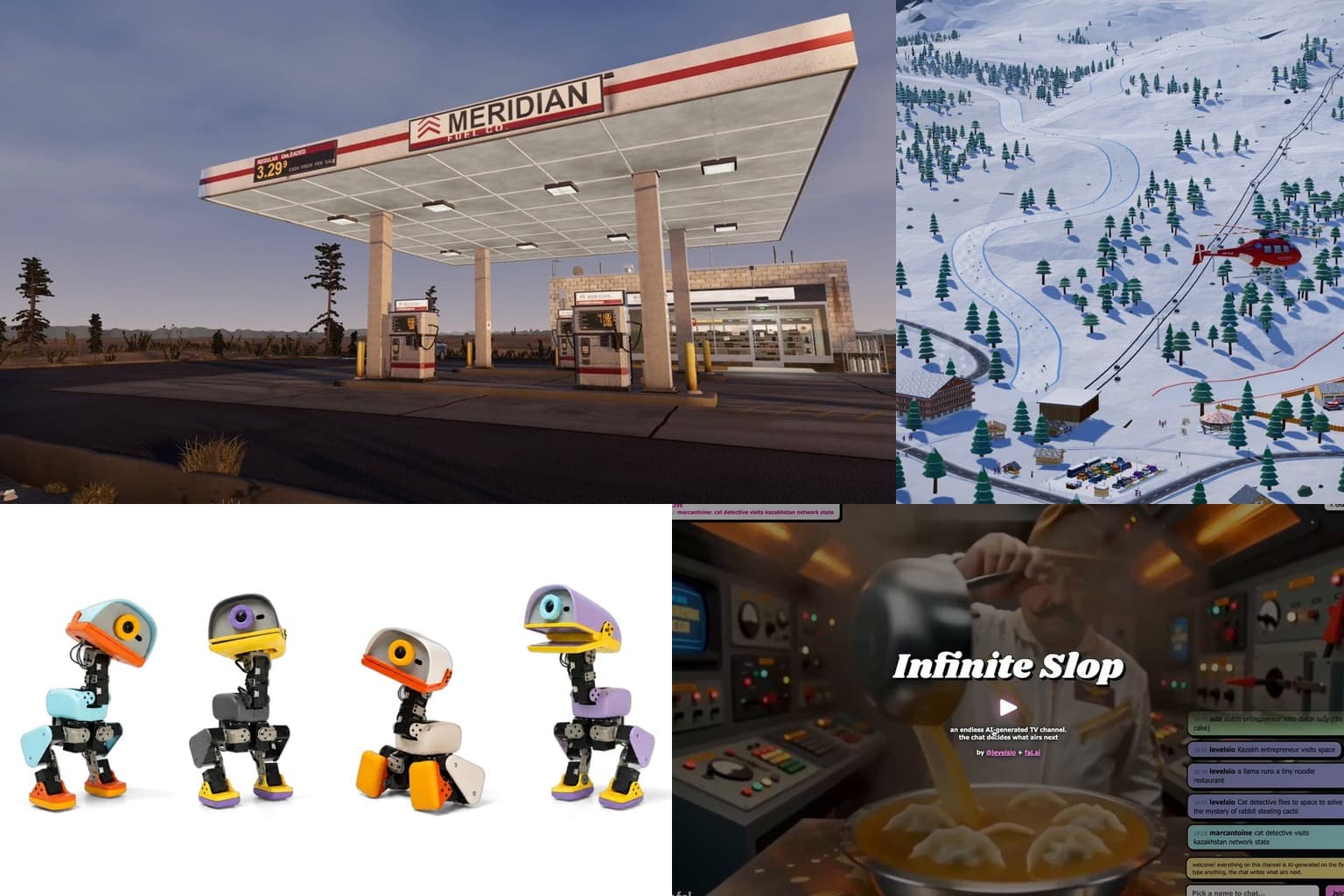
Someone built a 108,000-line ski game without knowing how to code. Another person trained a tiny model on 778,000 iMessages. There is also a gas station made without downloaded 3D models, a TV channel controlled by its chat, a $399 robot duck and a skill that turns one photo into a sticker pack.
You can open every project below. Where possible, I linked both the live demo and the code. Numbers such as code size and training time come from the builders.
The links and claims do not all have the same level of proof. This is what I checked for each project. I did not independently reproduce every number.
| Project | Builder | Built with | Open it | Evidence |
|---|---|---|---|---|
| Gas Station Highway | Prasen / StarKnightt | Claude + Three.js | Demo · Code | Live project and repository, including its interaction checks |
| Alpenwelt Tycoon | Suspicious-Month-910 | Claude Code + Three.js | Game · Post | Live game, original builder post and player reports |
| Texts to Transformer | Pietro Schirano | GPT-5.6 Sol + MLX | Code | Repository documentation, evaluation and privacy notes |
| Infinite Slop | Pieter Levels | fal H3 Max | Channel | Live channel and named published speed claims |
| Microduck | Pollen Robotics | MuJoCo + ONNX | Project · Code | Official specifications plus control and training repositories |
| MemeSticker | shanliuling | Agent Skills + image generation + Python | Code | Repository instructions and example output |
Claude built a gas station without downloaded 3D models
The pumps, shop, road and landscape are generated in code.
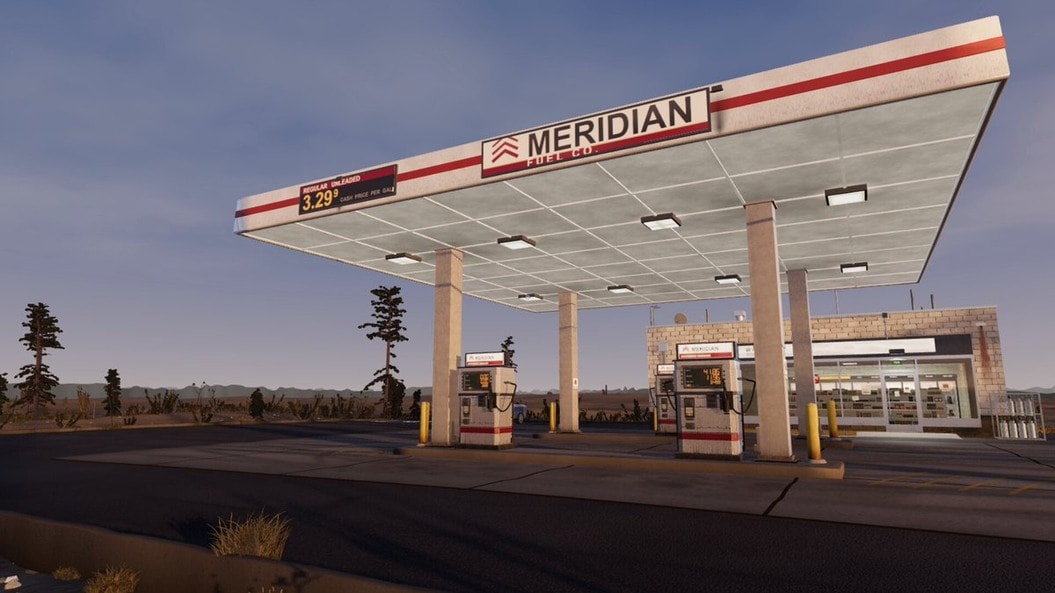
Prasen used Claude and Three.js to build a first-person gas station at dawn. The building, pumps, shelves, road, landscape and lighting all come from code. There are no downloaded 3D models.
You can walk into the shop, open the doors and use the fuel pumps. The repository even contains automated walks that check those interactions instead of relying on one good-looking video.
He wanted this game as a kid. Claude helped him build it
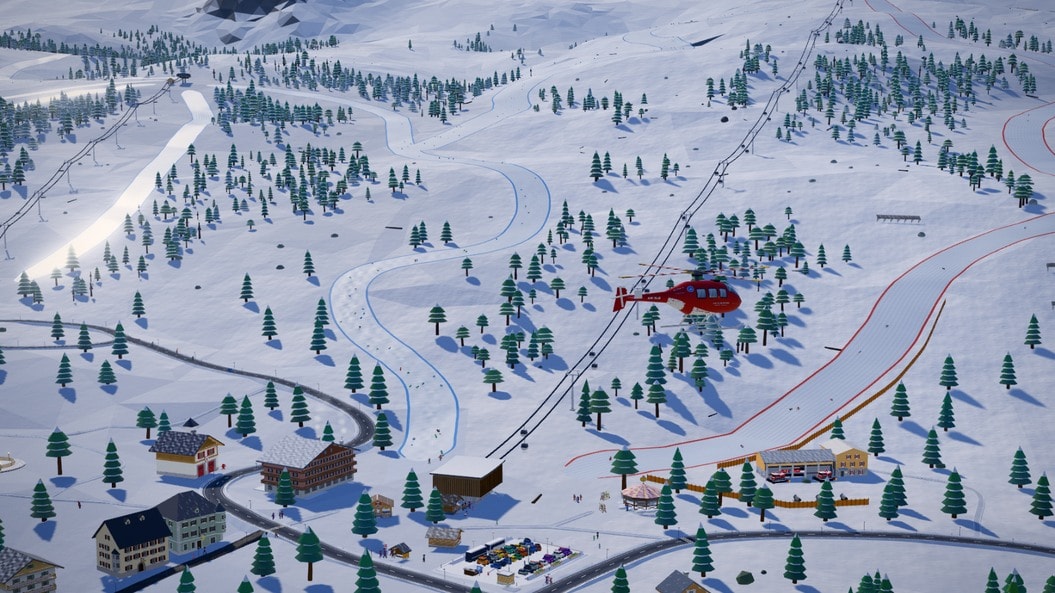
Alpenwelt is a browser ski-resort tycoon with weather, traffic and working lifts.
The builder wanted to make a ski-resort tycoon game when he was a kid, but he never learned to code. He started working with Claude Code in June. The game is now 108,000 lines and has more than 50 buildings, five lift types, skier queues, avalanches, snowplows, grooming snowcats and helicopter rescues.
It still feels unfinished. People in the original Reddit thread found the tutorial confusing, the road builder awkward and the navigation easy to get lost in. One person also reported a freeze. I would fix the first 20 minutes before adding another building.
One prompt turned 778,000 iMessages into a tiny model
A local language model learns phrasing and slang from an iMessage archive.
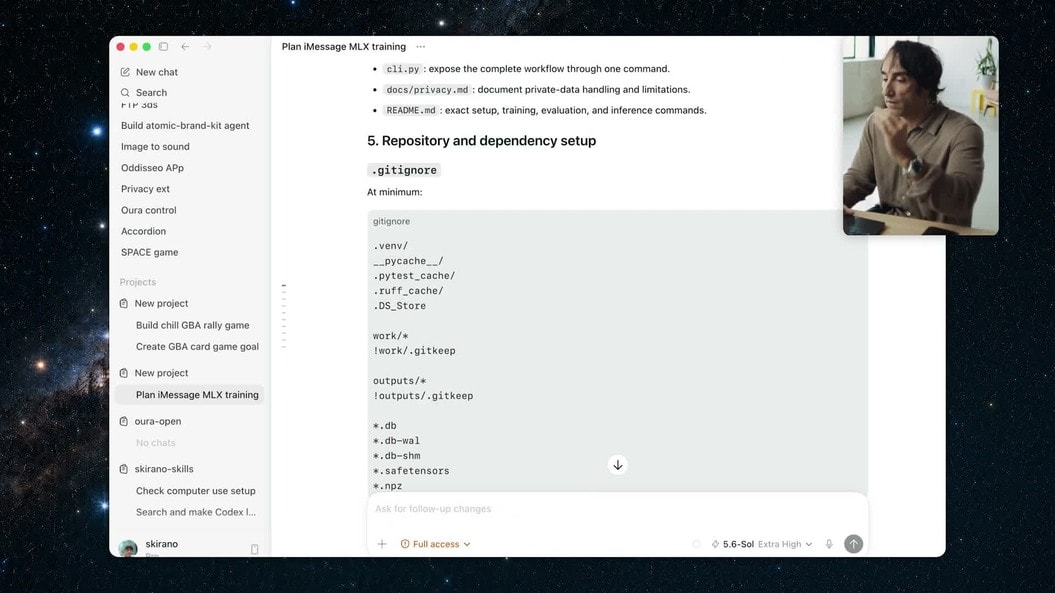
Pietro Schirano gave GPT-5.6 Sol one prompt and asked for the complete training pipeline. His run used 778,000 messages and about eight million tokens. He says training the four-layer, 1.38-million-parameter Transformer took roughly half an hour on his Mac.
The model only learns things such as your reply length, punctuation, slang and repeated phrases. It cannot answer general questions or do multi-step reasoning. The repository reads the Messages database without changing it, removes obvious identifiers and checks for memorisation. Keep the training files and the finished model private because it can still repeat parts of your messages.
The chat decides what this AI TV channel shows next
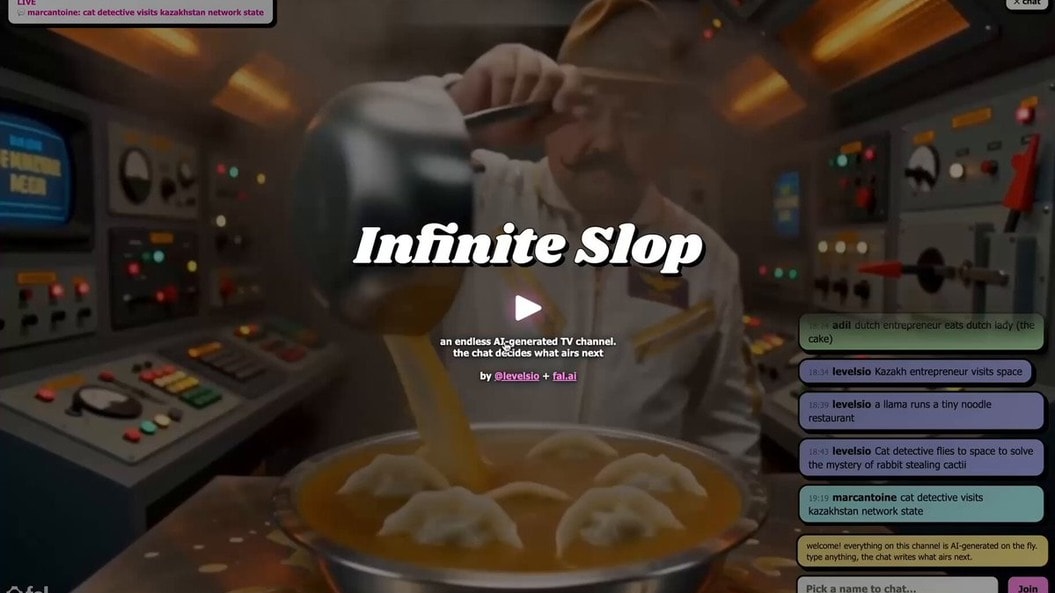
Viewers type a request, then the next five-second scene follows it.
Pieter Levels connected a public chat to fal's H3 Max video model. Viewers ask for things such as a cat detective flying to space, and the channel uses those messages to make the next five-second scene.
It works because the model is faster than the video it produces. fal says H3 Max can make a five-second clip in under three seconds and reports roughly 35 times the throughput of the official H3 endpoint. Design Arena measured more than 50 times the throughput of the other models in its separate test.
Not sure which AI model to use?
21 models · Personalized picks · 60 seconds
A $399 robot duck learned to walk in simulation
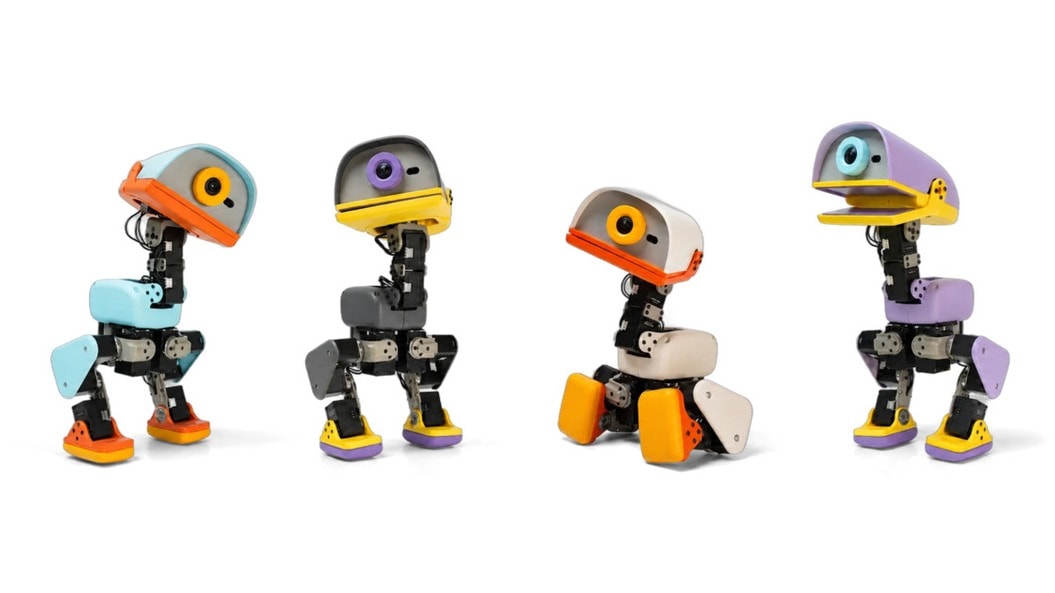
Fifteen servos follow reinforcement-learning policies at 50 Hz.
Microduck is 25 centimetres tall, weighs 800 grams and has 15 servos. It can walk, roll on optional wheels, get up after a fall, kick a ball and pick up small objects with its beak. Its movement policies are trained in MuJoCo, exported to ONNX and run on the robot at 50 Hz.
Pollen Robotics published both the control stack and the separate training code under Apache 2.0. The robot costs $399. That is still expensive for a toy, but cheap for a biped you can use for reinforcement-learning experiments.
MemeSticker turns one photo into a complete pack
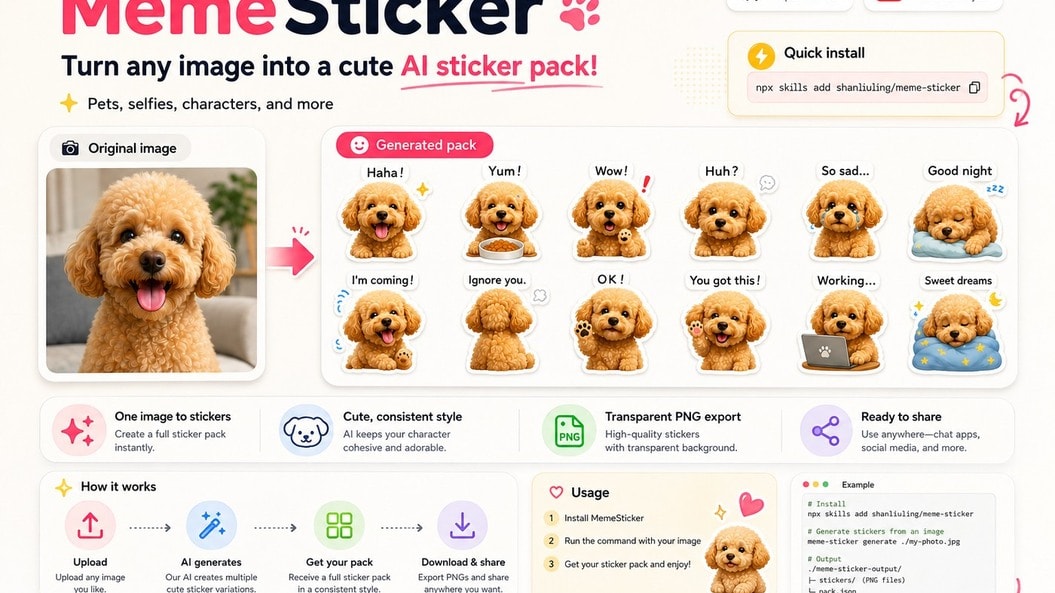
MemeSticker makes the sheet, cuts it up and exports transparent PNGs.
MemeSticker is the smallest project here and probably the easiest one to use today. Give the skill a pet, selfie, character or object. It makes the complete sticker sheet in one image call, cuts out each sticker, removes the backgrounds and gives you transparent PNG files in a ZIP.
It is open source and works with any compatible agent that supports Skills, image generation and Python. Complicated backgrounds and generated text can still need cleanup.
Before opening Claude or Codex, write down the output you want: a file, a screen, an action or a physical behaviour. If you cannot name it, the project is still too vague.
For more hands-on examples, see the previous weekly builder edition, or use our AI model picker before starting your own project.
FAQ
What AI projects can I try right now?
All six projects in this edition are ones you can open and try. Gas Station Highway is a first-person scene built with Claude and Three.js, and Alpenwelt Tycoon is a 108,000-line ski-resort game. Texts to Transformer trains a tiny local model on iMessages. Infinite Slop is an AI TV channel steered by its chat. Microduck is a $399 open-source robot duck, and MemeSticker turns one photo into a sticker pack.
Can you build a game with Claude Code without knowing how to code?
One builder did. He wanted to make a ski-resort tycoon game as a kid but never learned to code, and started working with Claude Code in June. Alpenwelt Tycoon is now 108,000 lines with more than 50 buildings, five lift types, avalanches and helicopter rescues. It still feels unfinished: Reddit players found the tutorial confusing and the road builder awkward, and one reported a freeze.
How do you train an AI model on your iMessages?
Pietro Schirano's Texts to Transformer repository does it locally with MLX. He gave GPT-5.6 Sol one prompt asking for the complete training pipeline, then trained a four-layer, 1.38-million-parameter Transformer on 778,000 messages, which he says took roughly half an hour on his Mac. The model learns reply length, punctuation, slang and repeated phrases, but cannot answer general questions. Keep the files and model private.
How much does Microduck cost?
Microduck costs $399. Pollen Robotics built it as an open-source biped that is 25 centimetres tall, weighs 800 grams and uses 15 servos. It can walk, get up after a fall, kick a ball and pick up small objects with its beak. Its movement policies are trained in MuJoCo and run at 50 Hz, and both the control stack and training code are published under Apache 2.0.
What is Infinite Slop?
Infinite Slop is Pieter Levels' AI TV channel where the chat decides what plays next. Viewers type requests, and the channel uses them to make the next five-second scene with fal's H3 Max video model. It works because the model is faster than the video it makes: fal says H3 Max can produce a five-second clip in under three seconds.

Founder of Spectrum AI Labs — testing AI tools and models, and writing up what actually ships.
More about Paras →Stay ahead of the AI curve
We test new AI tools every week and share honest results. Join our newsletter.